
24/7 locksmith
May 12, 2026
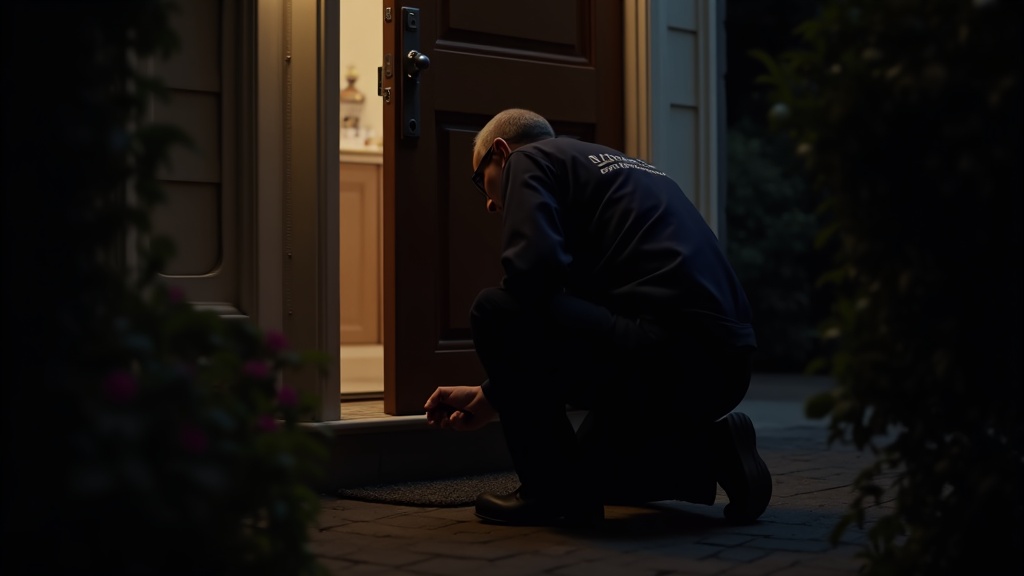
The Call You Make at 2 a.m.
The deadbolt jams just as the wind starts knifing down the street. Your groceries are in one hand, your phone is sliding out of your glove, and the front door suddenly refuses the key it accepted all winter. Nobody plans for a lockout. It arrives in the least elegant way possible: tired, cold, late, and usually with somewhere else you were supposed to be.
That’s the real territory of a serrurier 24 7 in Montreal. Not glamorous. Useful. A mobile technician is less about dramatic rescues than about getting an ordinary day back on its hinges after it has gone sideways.
What late-night lock trouble actually looks like
Some calls are obvious. You step into the hallway in socks, the apartment door clicks shut, and your keys are still on the console beside the mail. Others are messier. A condo buzzer works, but the unit lock spins uselessly.
A back door on a duplex swells after freezing rain and won’t latch no matter how hard you lean into it.
Cars bring their own version of bad timing. A key fob dies in the underground parkade after a Habs game. The trunk closes on a ring of keys while skates and backpacks are still inside. On older vehicles, the key turns halfway, then stops, because the ignition cylinder has been wearing down for months and finally chose tonight to quit.
Commercial calls tend to feel smaller until they don’t. A restaurant owner can’t arm the front door lock after close. The side entrance at a dépanneur won’t reopen for the morning delivery. One bent key in a mortise cylinder can hold up an entire opening routine.
The mobile workshop that comes to you
A good after-hours technician is really driving a tiny workshop. The van matters almost as much as the hands using it. Inside are key blanks, cylinders, latch hardware, decoding tools, programmers for certain automotive systems, and enough odd little parts to handle the lock that fails at the worst possible hour.
That mobility changes the job. Instead of towing a car or removing a door and hoping a shop can sort it out later, much of the diagnosis happens at the curb, in a driveway, or under fluorescent garage lighting that makes everyone look more exhausted than they already feel.
In Montreal, the weather adds another layer. Extreme cold can stiffen older mechanisms and expose weaknesses that stayed hidden in milder months. Snow packed into a car-door lock, slush freezing around a commercial threshold, or a storm-swollen wooden frame can all turn a normal lock into a stubborn one.
Getting back inside without wrecking the door
People often imagine lock work as force first, finesse later. The better approach is the opposite. A skilled hand starts by reading the hardware: is the latch slipped, is the cylinder seized, is the strike misaligned, did the key shear inside, or did someone simply pull the door closed with the knob locked?
That distinction matters because the cheapest problem to fix is usually the one that hasn’t been damaged yet. If the issue is alignment, a careful adjustment may solve it. If the key has snapped, extraction tools can remove the broken blade without replacing the whole assembly. If the cylinder is done for, rekeying or swapping the core is often cleaner than trying to bully it back into one more season.
Apartment buildings bring another reality: not every lock should be touched by the first person with pliers. Controlled-access entrances, intercom-linked doors, and certain condo systems involve building rules, restricted keyways, or property-management approval. A technician who knows the line between “can fix” and “needs authorization” saves everyone trouble later.
Why storefronts and offices call after everyone else has gone home
Commercial lock problems rarely happen at a convenient hour. They show up at closing, during cash-out, after a staff change, or right before a tenant turnover. A lock that still technically works can still be a problem if former keyholders are floating around with copies nobody accounted for.
That’s where rekeying earns its keep. You keep the existing hardware but change the pins so old keys no longer work. It’s a practical move after staffing changes, lost key rings, or a move into a new unit where nobody can say with confidence how many duplicates are out there.
Then there are the truly unglamorous failures: panic bars that don’t retract properly, narrow-stile locks on aluminum doors that start sticking, closers that pull a misaligned door into a bad relationship with its frame. Those are the calls that hold up opening staff at 6 a.m. and make everyone wish they had dealt with the “small issue” last month.
Cars are their own category
Automotive lockouts make people feel especially helpless because modern vehicles can fail in oddly specific ways. Sometimes the battery in the fob is dead but the hidden emergency key still works. Sometimes the door opens yet the anti-theft system won’t recognize the transponder. Other times the problem isn’t electronic at all; it’s a worn key, a damaged blade, or a frozen mechanism after a hard cold snap.
Newer cars complicate the picture, and not every mobile operator handles every make. That’s normal. Programming capabilities vary, and some jobs require tools or codes that aren’t universal. The useful question is not “Can you do every vehicle?” but “Can you tell quickly whether this one is doable on site?”
That honesty matters more than bravado in a parking garage at midnight.
What a sensible call sounds like
Panic makes people vague. Fair enough. Still, the fastest way to get the right help is to describe the problem like a scene, not a label. “Locked out” can mean ten different things.
“The key turns but the latch doesn’t retract” is better. “It’s a steel door, commercial unit, back alley entrance, key snapped just inside the cylinder” is better still.
- Say whether it’s residential, commercial, or automotive.
- Describe what the key, knob, fob, or cylinder is doing.
- Mention building type, parking limitations, or access codes if relevant.
- Note anything urgent, like a child locked inside, an unsecured storefront, or a door that won’t lock at all.
That kind of detail helps the person on the other end decide what tools to bring and whether the problem sounds like entry, repair, rekeying, extraction, or replacement. It also reduces the miserable dance where the wrong hardware shows up and everyone loses another hour.
The difference between a quick fix and a recurring headache
Not every successful call-out is a permanent repair. m. is simply safe entry and a working lock until daylight. That’s reasonable.
But some lock failures are warnings, not flukes.
If a deadbolt has been catching for months, if a storefront cylinder keeps binding, if a car key only works when held at a weird angle, the mechanism is already telling you something. Waiting until it fails completely tends to move the job from convenient maintenance to after-hours problem. The bill is one thing; the disruption is usually worse.
That’s why the best technicians are often the least theatrical. They open the door, explain what happened in plain language, and point out whether the hardware is tired, misaligned, badly installed, or simply old. A local operator like locksmithsnearyou24.com can be useful in exactly that unflashy way: not as a miracle worker, just as someone who knows what usually fails, and how, in this city.
Choosing calm over chaos
The odd thing about lock trouble is how quickly it shrinks your world. One stubborn cylinder, one missing key, one dead fob, and suddenly all you want is a small, competent solution. Not a sales pitch. Not a lecture.
Just a person who can get the door open, secure it properly, and tell you what comes next.
Montreal has no shortage of moments that test hardware: deep cold, wet springs, old building stock, busy sidewalks, and cars parked half their lives in garages. A dependable serrurier 24 7 isn’t really selling drama. The job is simpler than that. Show up, solve the immediate problem cleanly, and leave the lock better than it was found.
If there’s a lesson here, it’s a plain one. Keys and locks almost always give warning before they quit entirely. Listen to the sticking deadbolt, the fob with a fading battery, the office key that suddenly needs a jiggle. It’s easier to deal with hardware on your own schedule than on the coldest night of the month.
Need a locksmith now?
24/7 mobile service in Montreal and surrounding areas. Price confirmed by phone.
514-312-0638