
forced lock
May 21, 2026
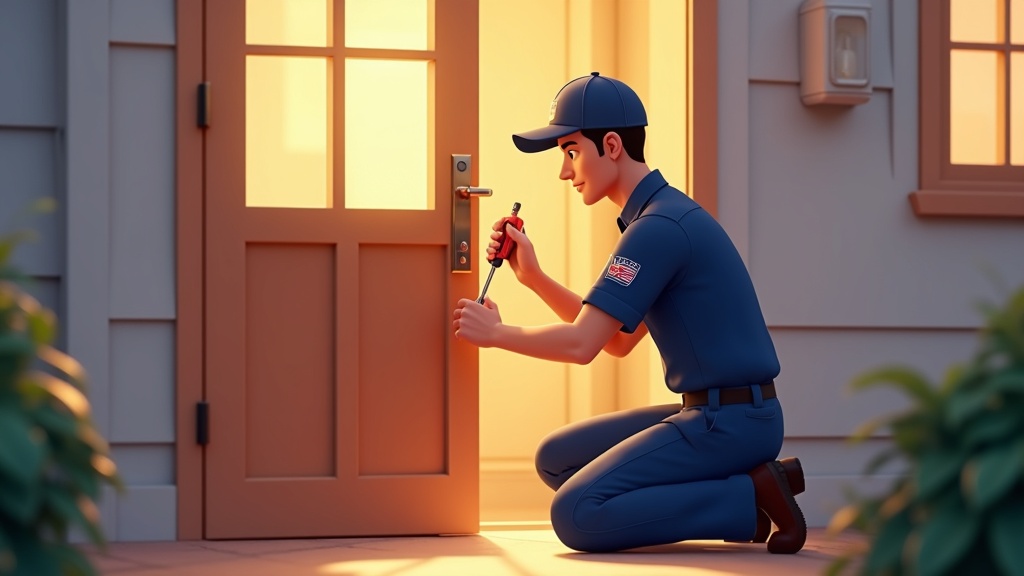
forced lock
A forced lock is not just a door that no longer closes properly. It is often a bent cylinder, a shifted strike plate, a damaged internal mechanism, or a frame that absorbed the impact. The right response is to secure access right away, not to keep forcing the key, and then have an on-site evaluation of what can be repaired and what must be replaced. At Montreal Locksmith, we see this kind of situation at all hours: returning from work, a business opening early in the morning, a car affected in a parking lot, or a building door found damaged when coming home.
The first step is simple: check whether the door still stays closed, whether the key turns abnormally, and whether the jamb or strike plate has shifted. If the entry is no longer secure, you need a fast response. For a Montreal Locksmith, the most helpful thing is to describe on the phone the type of door, the lock brand if you can see it, and the visible damage around the cylinder.
Have you just noticed a forced lock? Do not wait until tomorrow. Call Montreal Locksmith for a 24/7 emergency response; our mobile team comes directly on site to secure access and restore a working lock.
Recognizing the real damage after a break-in attempt
A lock can seem “just a little stuck,” when in reality the mechanism took a hit. The most common signs are a cylinder that spins freely, a key that goes in poorly, a handle that goes down without opening, or a door that no longer sits properly against its frame. On residential doors, we often see unusual play around the deadbolt. On commercial storefronts, the problem is sometimes in the pull bar, the door closer, or the electric strike.
You also need to inspect the wood, aluminum, or steel around the lock. A failed break-in does not always destroy the cylinder; it can warp the edge of the door, rip out the original short screws, or crack the frame. In those cases, changing only the cylinder does not solve the problem. The lock is new, but the door remains weak.
On site, our team always starts with a quick three-point inspection: cylinder condition, door alignment, and anchor point strength. This check takes little time and avoids installing an unnecessary part. If the hardware can be saved, we repair it. If security is no longer sufficient, we replace it right away.
In some older buildings in Plateau, Rosemont, or Villeray, we still find installations mounted with screws that are too short or thin plates. After a forced-entry attempt, these assemblies are not worth “saving” at all costs. It is better to start again on a solid base, especially if the door opens directly to the outside.
What a locksmith does on site, step by step
When we arrive for a forced lock, the goal is not just to open or close it again. We have to restore security immediately, with what we have in the truck, without keeping the client stuck for hours. In practice, the service follows a precise order.
- Inspection of the cylinder, bolt, and frame.
- Opening and closing test without forcing the mechanism further.
- Removal of warped or unusable parts.
- Repair of the anchor point if the strike plate or jamb has shifted.
- Installation of a new lock or a compatible new cylinder.
- Final adjustment: alignment, bolt depth, key smoothness.
For a condo or house door, a simple cylinder replacement can take around 20 to 40 minutes if the frame is not affected. If the break-in attempt tore out the strike plate or shifted the door, more time is needed to reinforce the mounting and restore alignment. On a commercial door, it is often longer because of specific parts: mortise, exterior handle, knob lock, panic bar, or access control.
One question comes up often: can it be repaired without changing everything? Yes, sometimes. A damaged cylinder is easy to replace if the surrounding hardware is intact. On the other hand, a cracked mechanism, a forced mortise case, or a shattered frame require more than a “small adjustment.” That is where a useful emergency locksmith service makes the difference: arriving equipped to stabilize the situation on the first visit.
For businesses, we also try to limit downtime. A shop that has to open at 10 a.m. cannot afford to wait for a special order before having at least a secure temporary closure. We can often install a good-quality standard cylinder on site and then plan a more complete upgrade afterward if needed.
Repair or replace: the right choice depending on the lock type
Not all forced locks are the same. On a standard cylinder lock, if the attack targeted the key or the cylinder, replacing the cylinder is often the logical solution. It is fast, clean, and you can leave with new keys right away. If the deadbolt itself was bent or the housing suffered damage, the whole assembly must be replaced.
On a multipoint lock, common on some newer doors, you have to be more careful. A break-in attempt may have shifted several locking points at the same time. If you change only the visible part without checking the rods and transfers, the door will keep sticking. This type of work requires a more precise diagnosis.
For a business, the decision also depends on the level of risk. If someone tried to open it with a twisting tool or clearly targeted the entrance, we often recommend changing the cylinder even if the lock still works. A compromised key, internal wear, or weakened anti-pick protection is not always visible to the naked eye.
In residential settings, you have to think about what comes next. If the lock was forced during an absence, many clients also ask us at the same time to quickly secure their access in the area with more resistant hardware: better-quality cylinder, reinforcement plate, long screws in the frame, sometimes a peephole or an additional lock. These are small details that truly change a door’s resistance.
For a car, the term “forced lock” often means a damaged door cylinder, a broken key, or an opening attempt with the wrong tool. Here again, it all depends on whether the problem affects only manual access or also the electronics and ignition. A mobile locksmith can already confirm on site whether it is a simple cylinder issue or broader damage.
After the service: how to prevent a door from becoming vulnerable again
A new lock installed on a weak frame remains an easy entry point. After a break-in or an attempt, you need to look at the whole assembly. The minimum is a reinforced strike plate, long well-anchored screws, proper door alignment, and a cylinder suited to actual use. For a heavily used door, such as the entrance to a duplex or a commercial unit, “basic” parts wear out quickly.
The most useful measure is often the least visible one: reinforcing the area where the bolt enters. When that part is solid, the lock works properly and the door withstands blows better. If the frame is old wood, the fastening sometimes has to be redone deeper into the structure, not just by putting two screws back in the same place.
You also need to think about keys in circulation. If a lock was forced after lost keys, a recent move, a separation, or an employee leaving, replacement or rekeying becomes a basic measure. We often see this scenario in small businesses and rental units. In those cases, it is better to ask right away what access-control options are realistic rather than delaying the decision.
If you manage multiple access points or a space with staff turnover, a locksmith can also guide you toward a solution that is simpler to manage daily. To find out whether our team covers your area or a building on the outskirts, you can view the areas served by our mobile service. The idea is not to install complicated equipment for no reason, but to reduce the weak points that keep coming back.
A door that closes “more or less” after being forced is not secure. Call Montreal Locksmith now; we come to you, assess the damage on site, and restore reliable locking without unnecessary delay.
What to prepare before the locksmith arrives
A few details save time. Say whether the door is open or blocked, whether the building is residential or commercial, and whether you can see a brand on the lock. A photo of the cylinder, the door edge, and the strike plate often helps us prepare the right parts before we even leave.
If the police came or if you need to file an insurance claim, take photos before any handling. Also keep the broken pieces: cylinder, key, screws, decorative cover. It is not unusual for an insurer to request images of the point of impact or the old lock.
On site, make sure an authorized person can grant access or confirm occupancy of the premises. For a business, this is even more important if we have to replace a cylinder linked to multiple key copies. And if the situation is stressful, the simplest thing is to contact us to explain the context; we will tell you what to prepare depending on the type of lock.
Last point: do not try to “finish the job” with a screwdriver, random oil, or pliers. We regularly deal with locks that could have been cleanly replaced in 30 minutes, but become longer and more expensive because of improvised handling. If the key is forcing, stop there.
Does a forced lock always have to be replaced?
No. If only the cylinder is affected and the door as well as the main mechanism are intact, a partial repair or cylinder replacement may be enough. If the frame, bolt, or housing are damaged, you generally need to go further.
How long does an emergency service call take?
For a simple case, often less than an hour on site. If the break-in attempt shifted the door, tore out the strike plate, or affected a more complex commercial lock, it can take longer. The actual time mainly depends on the condition of the frame and the type of hardware.
Can a door be secured temporarily at night?
Yes. When full replacement is not possible immediately, a locksmith can often install a secure temporary solution to close the premises without leaving access vulnerable until the next day.
Is a lock that still works after a break-in attempt reliable?
Not necessarily. A mechanism may continue to turn even though it has been weakened. If the lock suffered an impact, it is better to have it inspected quickly rather than discover the failure when locking or opening.
Can I get 24/7 locksmith services for lock replacement in Montreal, Canada?
Yes, you can get 24/7 locksmith services for lock replacement in Montreal, Canada, especially after a serrure forcée or any sudden lock issue. locksmithsnearyou24.com in Montreal, Canada helps homeowners and businesses with emergency lock replacement at any hour. A locksmith can assess the damaged lock, recommend a secure replacement, and restore access quickly. This is especially useful if your property security has been compromised and you need immediate peace of mind.
I need urgent lock replacement for my home in Montreal, Canada, who can help?
If you need urgent lock replacement for your home after a serrure forcée, locksmithsnearyou24.com in Montreal, Canada can help with fast emergency service. A professional locksmith can replace damaged or unsafe locks, check the condition of your door hardware, and improve home security on the spot. This is important when a break-in attempt, lost keys, or a jammed lock leaves your home vulnerable. Choosing a local Montreal locksmith also helps reduce wait times during stressful situations.
Is there a reliable locksmith in Montreal, Canada for emergency lock replacement?
Yes, there are reliable options for emergency lock replacement in Montreal, Canada, including locksmithsnearyou24.com in Montreal, Canada. If you are dealing with a serrure forcée, a trusted locksmith can arrive promptly, replace the compromised lock, and make sure your entry point is secure again. Reliable emergency service should include quick response, clear communication, and suitable replacement lock options for your property. This can help you regain safety and avoid further security risks without unnecessary delay.
Need a locksmith now?
24/7 mobile service in Montreal and surrounding areas. Price confirmed by phone.
514-312-0638